Fahrräder mit einem Fahrradanhänger transportieren
Transporting Bicycles with the *Hinterher*
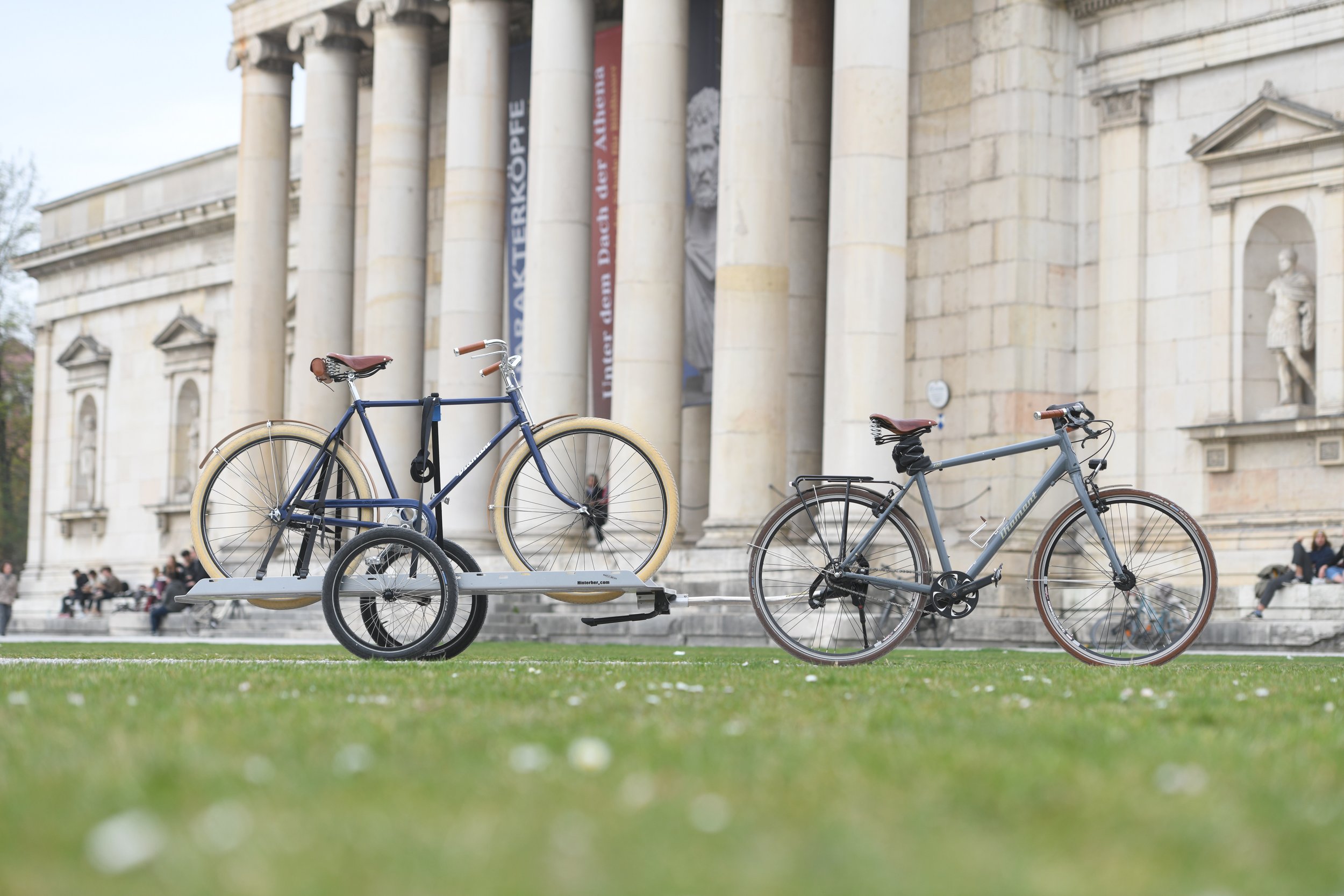
Many people don't even realize that the Hinterher can also be used to transport bicycles. And it works great: kids' bikes, recumbent bikes, even cargo bikes. We've collected many photos from our customers that show how this works in practice.
The main problem: The bicycle is usually longer than the bike trailer
Bicycles are long, especially adult bikes. And in most cases, the trailer itself is shorter than the bicycle being transported. When you load the bicycle onto the trailer, it sticks out at both the front and the back. The problem with this is that there’s actually hardly any space at the front, because that’s where the towing bicycle—the one pulling the trailer—immediately comes into play. So the bike you’re transporting can’t really extend past the front, unless you use a drawbar extension. If you don’t have one on hand, the bike has to extend past the back. The problem with that, in turn, is that the trailer becomes rear-heavy; it tilts downward at the back, which is very bad for handling—the trailer can easily start to sway.
Learning to Sail
You can actually let the load on the bike trailer extend all the way to the back, provided you make sure the trailer still remains slightly front-heavy. The key here is to balance the trailer, just like when sailing. So just pack a few heavy items in the front of the trailer to shift its center of gravity back toward the front. Of course, there’s a limit to how far you can take this balancing act, but with a bike (or a ladder), it’s usually pretty easy to manage.
Thinking Outside the Box
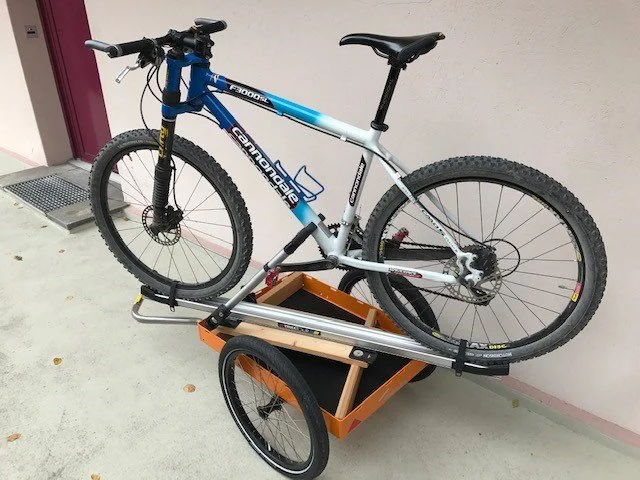
You can also transport a bike diagonally on a bike trailer. And the bike you’re transporting can certainly extend beyond the front of the trailer, provided it doesn’t get in the way of the rear wheel of the towing bike. When you’re riding with a trailer and make a right turn, your rear wheel swings out to the left. This is precisely why the drawbar connecting your trailer to your bike makes a wide arc to the left (as viewed in the direction of travel). But anything outside this arc will not come into contact with your bike’s swinging rear wheel. Therefore, the bike being transported can protrude slightly diagonally forward to the left.
Head First: Kids' Bikes on the Trailer
Where do you put the kids’ bikes when they no longer want to ride them on their own, or when the bike needs to be taken from daycare back home? The “upside-down” method has proven effective here. This involves placing the kids’ bike on the bike trailer with the saddle and handlebars facing down. Take a look at the example photos. It’s important to place a small cushion or a soft blanket under the handlebars of the kids’ bike to prevent the handlebars, bell, or other parts from getting scratched.
Accessories
A bike rack is available for the aluminum chassis models. It makes it easier to load a bike and secure it safely. If you have a model from the Transporter series, you don’t need it—those models are already designed for transporting bikes.
Build It Yourself
You can also easily build your own kind of transport rail. Wooden slats work well for this, or you can just improvise a bit. You can also modify a bicycle roof rack and adapt it for use with a bike trailer.
The Right Way to Stretch
When you secure a bicycle on a bike trailer, you should always route the tension strap high up around the bicycle—that is, below the handlebars or below the saddle. It’s important that the strap always be routed back to the same side where its other end is already secured. So, strap 1 is clicked into place on trailer side A with one hook, routed around the bike being transported, and clicked back into place on side A with the other end. And strap 2 is clicked into place only on side B.
Two Things About Safety
Be aware of the risk of your bike trailer tipping over when you’re transporting a bike with it. A bike transported upright on the trailer, in particular, raises the trailer’s center of gravity. Wider models such as the Hxxl, Hxxl Light, Hxxxl, and the Transporter series are not at risk due to their track width. If you frequently transport heavy loads or multiple bikes, you should install the heavy-duty kit and possibly consider a drawbar extension; this will make it easier for you to achieve a good load center of gravity.
We can't tell you whether transporting a bicycle this way is safe or complies with the regulations in your country. Be sure to secure the bikes thoroughly so that nothing comes loose while you're on the road. Instructions for this can be found in the user manual on page 40.