
About Us
Hinterher was founded in Munich in 2012 by Peter Hornung. As a carpenter and architect, he spent many years building furniture under the brand name raw & fine in a small workshop in the Glockenbachviertel neighborhood. However, the delivery van was often ill-suited for working in the city: too big, too cumbersome in constant traffic jams, and always on the hunt for a parking spot.
So a simple idea was born: a bike trailer that works like a Swiss Army knife—sturdy, functional, modular, and repairable.
After five prototype series, it was clear: This is more than just a practical solution for your own workshop. It’s a well-designed system for everyday life in the city.
Today, Hinterher trailers are in use by thousands of people around the world. They have received numerous awards for their design, functionality, and sustainability—but for us, one thing is paramount: that they perform reliably in everyday use.
The freedom of your bike. Expanded
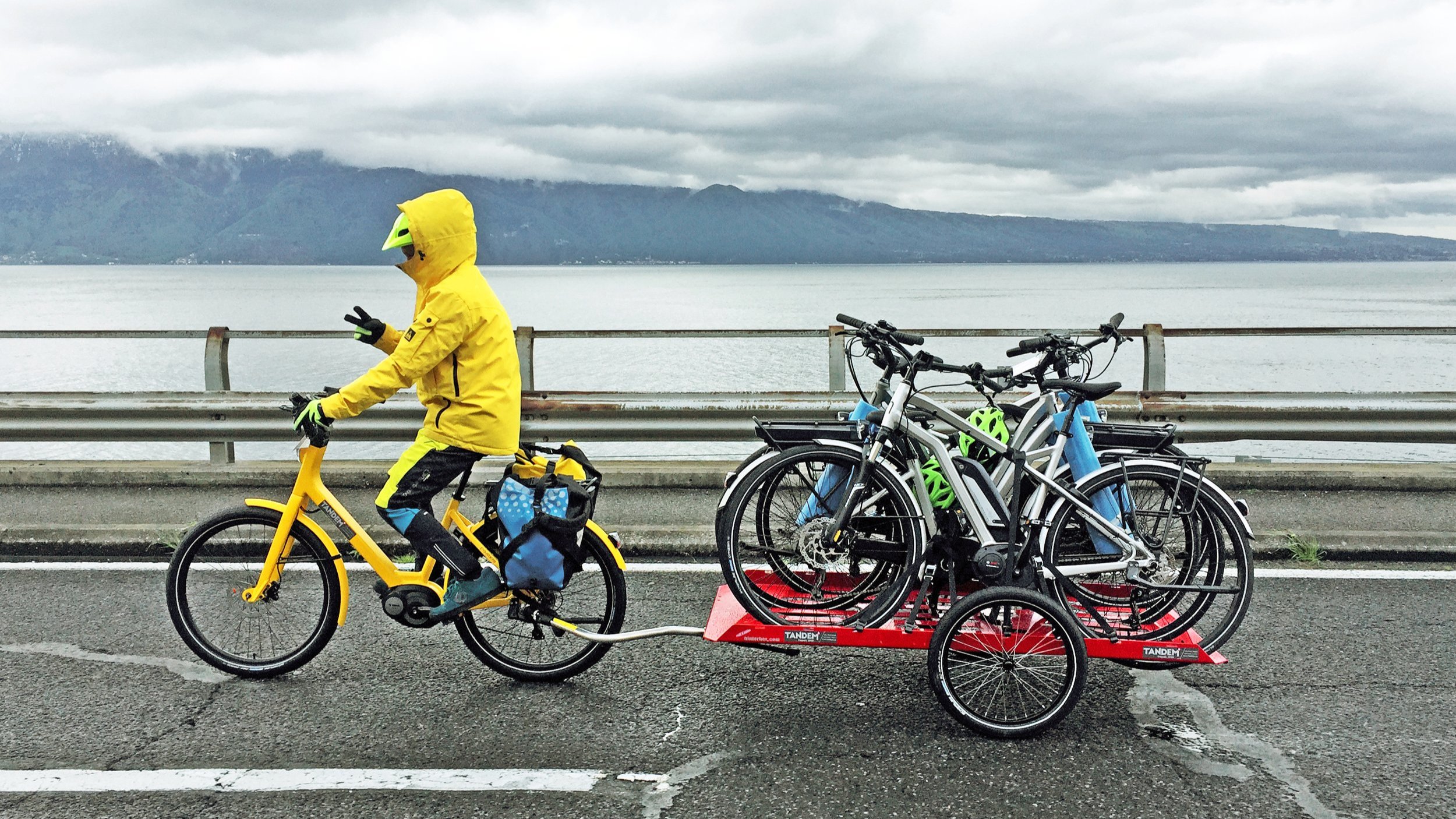
Bicycles are true masterpieces of efficiency. Even as children, they gave us our first taste of real independence—a passion that lasts a lifetime for many of us. The bicycle is a true all-rounder and offers a multitude of advantages: It’s inexpensive to buy and maintain, it’s lightweight, and it doesn’t take up much space. It keeps us fit, is allowed almost everywhere, and can always find a place to park. Especially in the city, the bicycle is unbeatably fast over typical distances. It produces neither exhaust fumes nor noise and poses relatively little risk to other road users. Many tasks are actually easier to accomplish by bike than by car—and with our trailers, we expand this range to cover nearly all everyday transportation needs. This way, any bicycle can be transformed into a full-fledged cargo bike in the blink of an eye.
What should a bicycle trailer look like?
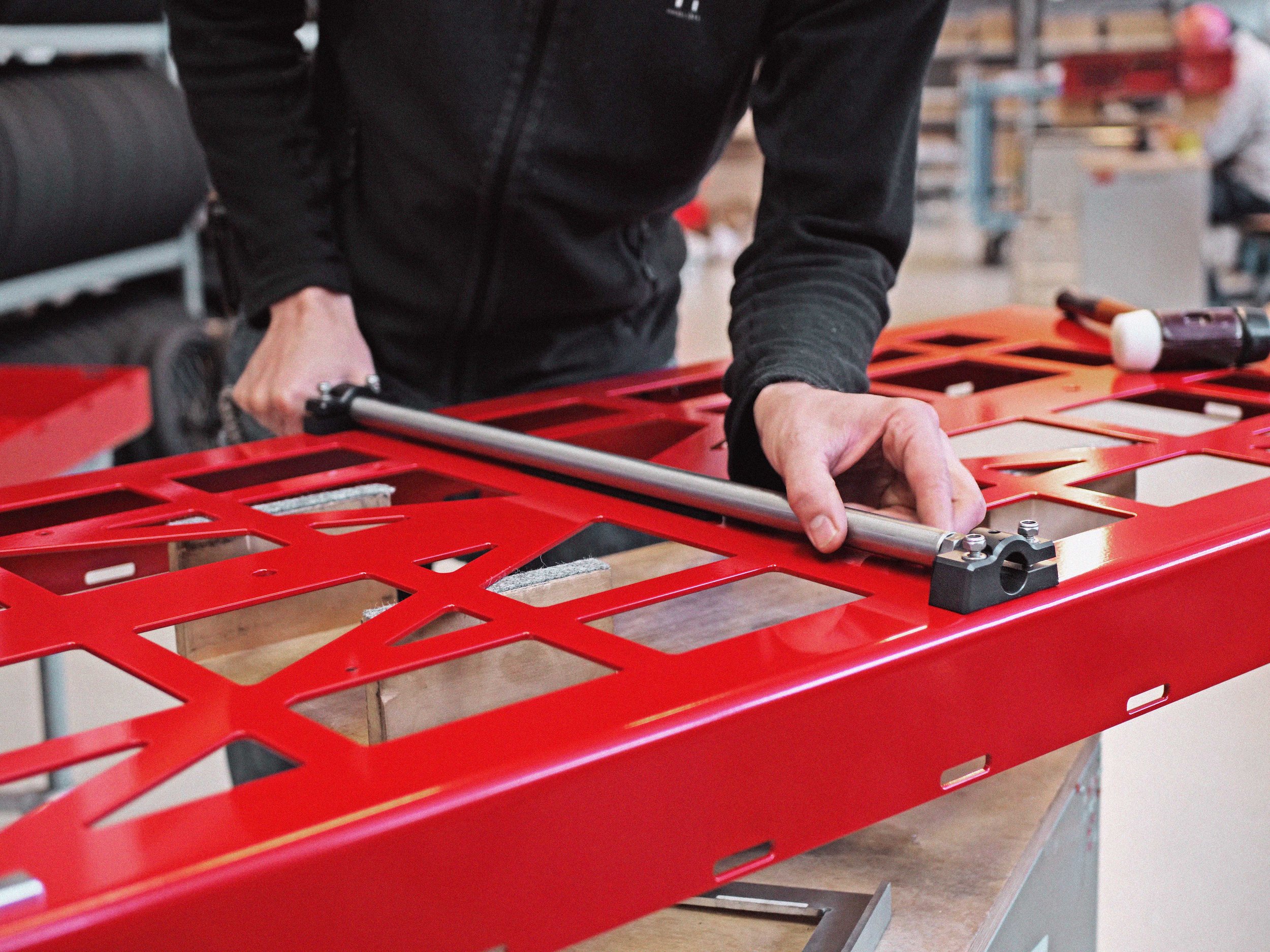
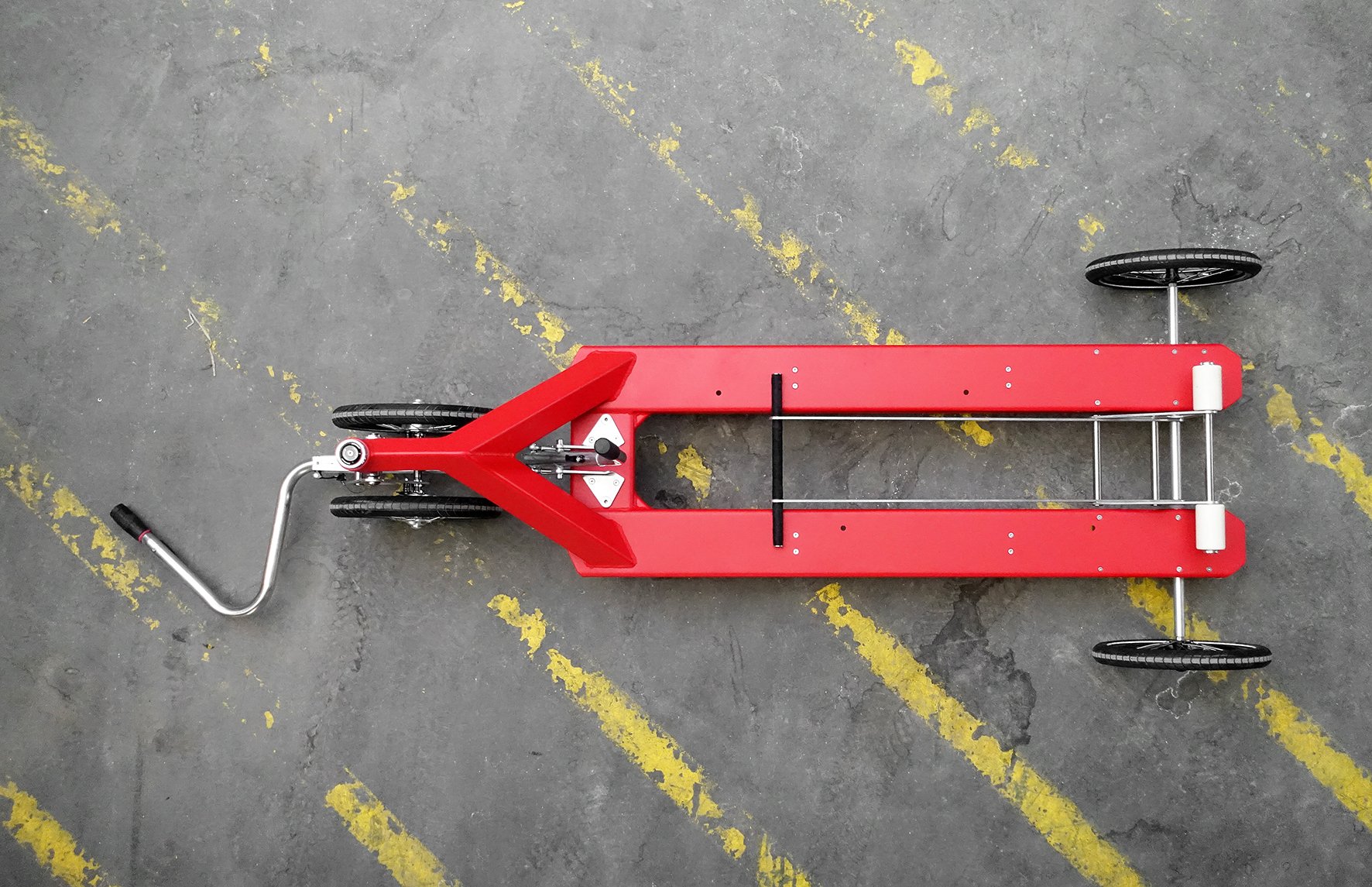
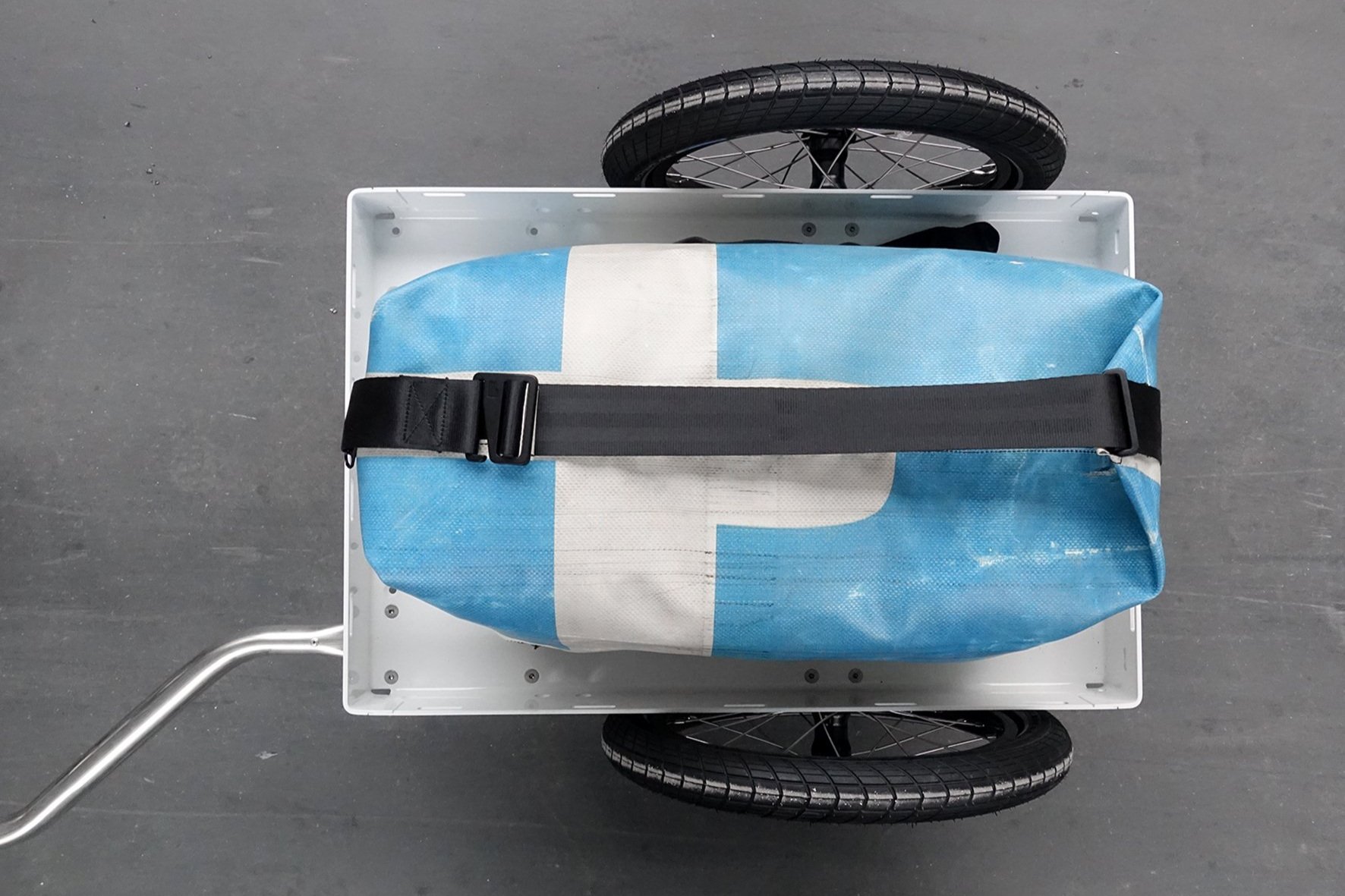
We asked ourselves what the perfect bike trailer would look like—one that could be used flexibly for a wide variety of tasks. The answer is our CNC-machined aluminum chassis: Unlike conventional designs made of tubing and fabric, it provides a base that is both rigid and lightweight. The surrounding rim ensures that nothing slips, while integrated slots for tension straps and attachment points for accessories guarantee maximum versatility. We see the fact that many of these innovations are now being copied as proof of our quality. An Hinterher grows with your needs and adapts to any transport task—whatever you have planned, we’ll make it easier.
Versatile
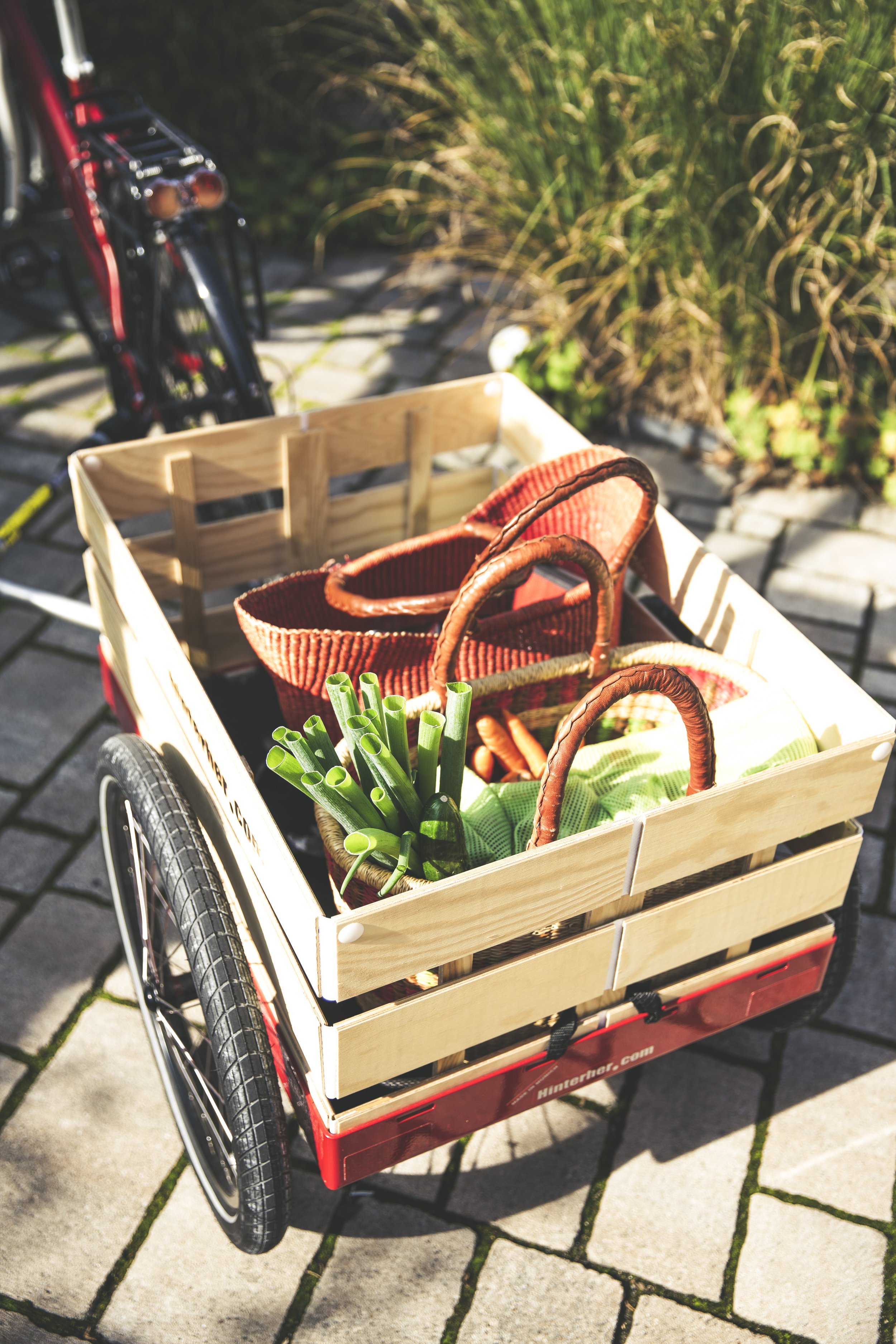
Our trailers can be used and combined with a wide variety of modes of transportation. Whether by bike, on foot, by bus or train, or on a long hike—the Hinterher is perfectly equipped for all these modes of travel or can be further customized with accessories. You can switch between these modes in just a few seconds without any tools. And because the Hinterher can be folded into a flat package with just a few clicks, it’s easy to transport in a car, camper, or high-speed train, and can be stored in any basement, hallway, or garage to save space. After all, most people don’t need a cargo bike or handcart every day.
Balanced
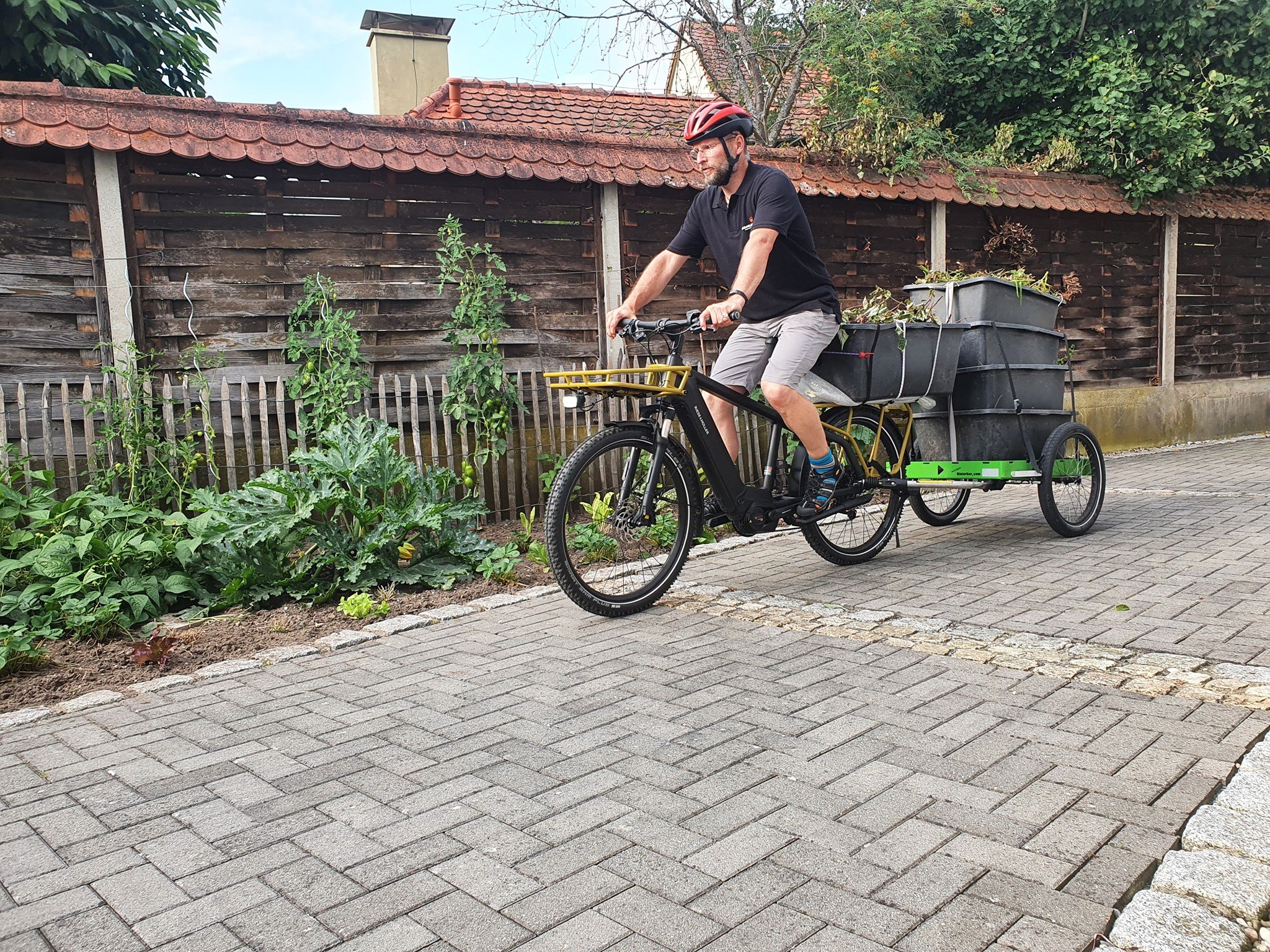
We strive to strike a balance between weight, capacity, and size. Our guiding principle is maximum simplicity combined with the highest quality: We eliminate everything superfluous to minimize space requirements and the need for maintenance. This optimized design often seems self-evident, but it can hardly be improved upon.
Our trailers can carry up to 200 kg, but even at 100 kg, a bicycle reaches its limits. We consider this sufficient for today’s infrastructure. Higher payloads change the nature of the product: the technology starts to resemble that of automobiles; systems become heavier, more expensive, and have less and less to do with “biking.”
In everyday life, extremely large trailers become impractical. They obstruct bike paths, cause parking problems, and require major reinforcements or overrun brakes. This increases costs and maintenance requirements. As a result, we’re moving away from traditional bicycle technology, which thrives on simplicity.
In the end, human power hardly plays a role anymore. Such systems often no longer fit in with the bike path infrastructure. We’ve come to this realization over the years—in part through award-winning innovations like the “Paletti.” Nevertheless, some projects never went into mass production in order to preserve what matters most: the simple, robust logic of the bicycle.
Sustainable and durable
Technical developments in e-bikes are happening at a rapid pace: Every few years, the next generation of motors is introduced, and everything continues to evolve. So it’s wonderful that there are still products like ours that never become obsolete. The Hinterher is built to such a high standard of quality that it would take an enormous amount of effort and expense just to make even marginal improvements. It’s also adaptable: even after years of use, it can be easily modified, expanded, or upgraded.
The combination of a bicycle and a trailer is appealing because the drivetrain and cargo area are separate. This turns any bike into a cargo bike while retaining the advantages of a high-quality, simple-to-assemble product that requires minimal maintenance. While cargo bikes are often only available in one-size-fits-all models, your perfectly fitting bike remains fully usable and can be flexibly upgraded as needed. This means that every new generation of e-bikes can immediately serve as a versatile cargo carrier.
responsibility
Hinterher was born out of our experiences with urban traffic and our conviction that a shift in mobility is necessary. Driven by an aversion to low-quality, disposable products, we want to make a positive contribution to climate protection. We are guided by the principles of the Economy for the Common Good—a goal we consistently pursue despite obstacles such as bureaucracy, location costs, and cheap imitations.
We address these challenges with regional solutions: Our suppliers are almost exclusively based in southern Germany. We practice zero waste, recycle 98% of our packaging, and are committed to the circular economy. We also focus on our employees’ carbon footprint and their use of bicycles for commuting.
Our supporters actively promote change. We make every material decision based on sustainability criteria and minimize the use of environmentally harmful substances. There is still much work to be done on the path to a fully sustainable economy, but we look forward to taking each of these steps together with you.